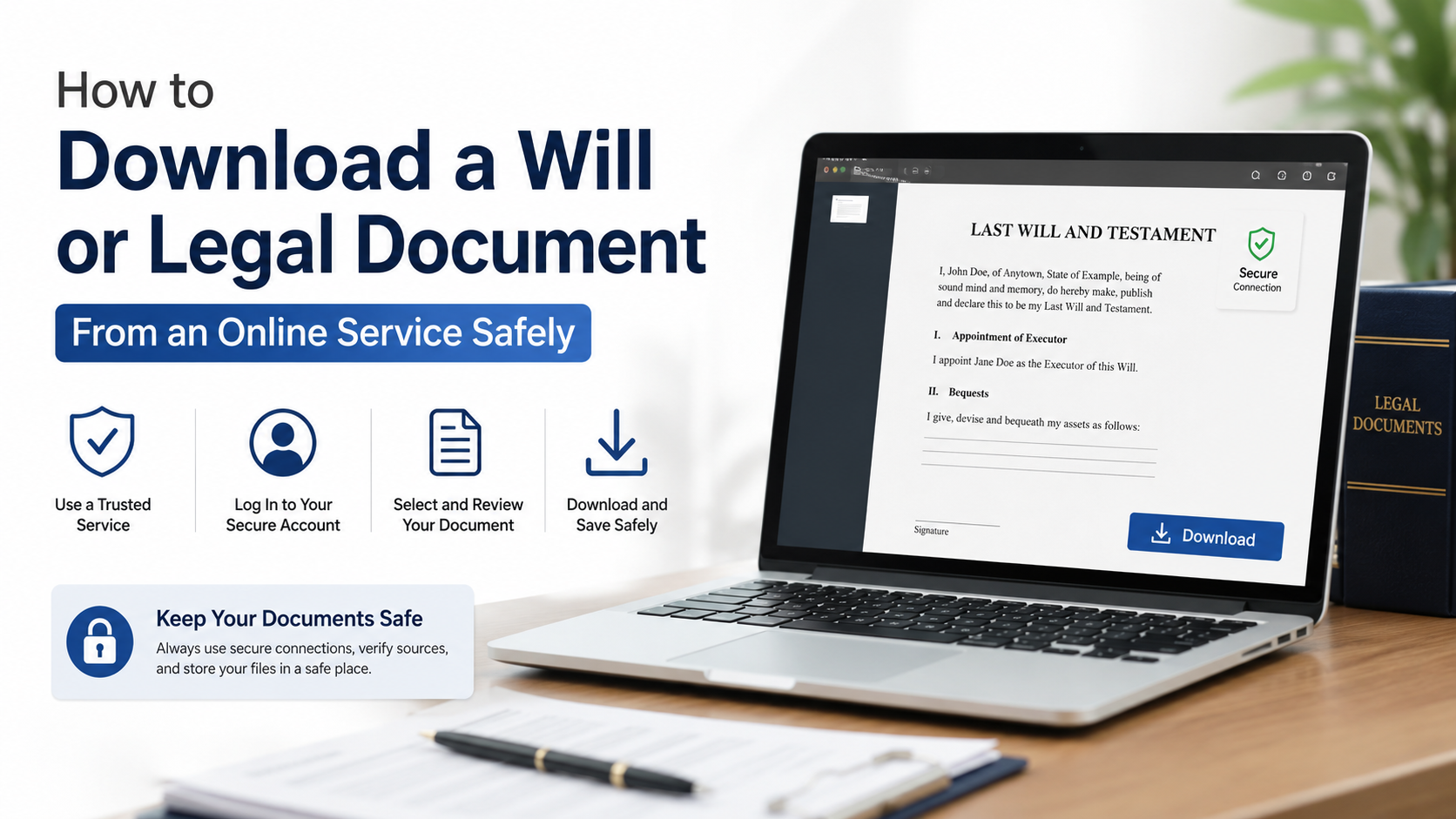
How to Download a Free Will Template and Understand What It Contains
If you need a basic document to record your wishes, you can download a free will template in Word or PDF format from a reputable legal-information website or an official government source. A template is only a starting draft, however. It becomes meaningful only after you complete it accurately, sign it voluntarily and have it attested by the required witnesses.
This guide explains the safest way to find and download a free will format in India, the clauses it normally contains, execution requirements, common mistakes and situations in which professional legal advice is sensible.
Key Takeaways
- Download a template from a recognised legal publisher, state registration department or established online will service.
- A will normally identifies the testator, beneficiaries, assets, executor and distribution instructions.
- Under Section 63 of the Indian Succession Act, 1925, a non-privileged will must generally be signed by the testator and attested by at least two witnesses.
- Registration is generally optional, but procedures and practical requirements can vary by state and personal circumstances.
- A generic form cannot resolve disputes over ancestral property, joint ownership, personal laws, trusts, business interests or overseas assets.
- Never upload Aadhaar numbers, passwords, OTPs, PINs or banking login details to an unknown template website.
What does “free will template” mean?

A free will template is a pre-formatted document containing standard headings and clauses for preparing a last will and testament. It may be offered as:
- An editable Microsoft Word file (
.docor `.docx) - A PDF document for printing
- An online questionnaire that generates a Word or PDF draft
- A plain-text sample that you copy into your own document
The Indian Succession Act, 1925 defines a will as a legal declaration of a person’s intention regarding property to be carried into effect after death. The Act does not prescribe one compulsory layout for every will. The correct wording depends on the person’s assets, family structure, applicable personal law and the wishes being recorded. You can read the statutory definition in the official India Code copy of the Indian Succession Act.
A downloaded template is therefore a model, not automatically a legally effective document.
How to download a free will template safely
Method 1: Download a Word or PDF sample

- Use a search engine to find a “will format India PDF” or “simple will format India Word”.
- Prefer a page published by a recognised legal-information company, a state registration department or a professional legal service.
- Check that the page clearly identifies its publisher, privacy policy and terms of use.
- Look for a visible Download, PDF, Word, or Sample Template button.
- Save the file to a folder you can find later, such as Documents > Estate Planning.
- Scan the downloaded file with your device’s security software before opening it.
- Open the file and read every heading before entering personal information.
ClearTax, for example, publishes an explainer and links to a sample will template. Its guidance notes that a will is signed by the testator and attested by two witnesses, and that registration is not compulsory in every case. Treat any online sample as general information rather than personalised legal advice. You can review its will format and sample download page.
Method 2: Use an online will generator
Some Indian services ask questions about your family, beneficiaries and assets, then generate a downloadable draft. Before using one:
- Confirm whether the basic download is genuinely free or whether payment is required at the final step.
- Read the privacy policy and understand whether your answers are stored or shared.
- Do not enter passwords, card PINs, OTPs, internet-banking credentials or cryptocurrency recovery phrases.
- Check whether the service provides Word, PDF or both formats.
- Keep a copy of the blank template and the completed document.
- Consider advocate review if the website itself warns that the document is only a draft.
Do not install an APK or browser extension merely to obtain a will template. A normal PDF or Word download from a trustworthy website is usually sufficient.
Method 3: Check an official government model
Some state registration or land-records departments publish model will formats. Government websites can move documents or change URLs, so confirm that the domain ends in an official government domain such as .gov.in or .nic.in. Search the relevant state registration department’s website rather than relying on a random file-sharing link.
An official model may still be general. It does not confirm that the wording suits your religion, property title, family arrangements or tax position.
What a free will template usually contains
A useful template should provide space for the following information.
| Section | What you normally enter |
|---|---|
| Title and declaration | “Last Will and Testament”, date and statement that this is your will |
| Testator details | Full name, age, address and identification details where appropriate |
| Capacity statement | Confirmation that you are a major, of sound mind and acting voluntarily |
| Revocation clause | Cancellation of earlier wills and codicils |
| Family details | Spouse, children, parents and other relevant legal heirs |
| Executor | Person appointed to collect assets, pay lawful debts and carry out instructions |
| Beneficiaries | Names, relationships and contact details of people or organisations receiving assets |
| Asset schedule | Property, bank deposits, investments, vehicles, jewellery, digital assets and other items |
| Specific gifts | The particular asset or amount given to a named beneficiary |
| Residuary clause | Who receives assets not specifically listed |
| Minor beneficiaries | Proposed guardian or trustee arrangements, subject to applicable law |
| Debts and expenses | Instructions for lawful debts, taxes and funeral or administration expenses |
| Witness block | Names, addresses, signatures and dates for at least two witnesses |
| Schedule or annexure | Detailed property descriptions, account references or supporting lists |
Property descriptions matter
Avoid vague phrases such as “my house in Delhi” if you own more than one property. For immovable property, record details that match your title documents, such as the flat or plot number, building, locality, city, survey number and approximate area.
A will can generally dispose only of property or rights that you lawfully own. Jointly owned property, Hindu Undivided Family assets, partnership interests and ancestral property may require separate analysis. Do not assume that a nomination in a bank, mutual fund or insurance policy is the same as a testamentary gift.
The executor’s role
An executor is the person you appoint to administer the estate after your death. The executor may need to locate the original will, obtain death and legal documents, pay valid liabilities, communicate with institutions and transfer assets according to the will.
Choose a responsible adult who is likely to remain available. You may name a substitute executor in case the first choice cannot act.
How to complete and execute the template
After downloading, follow this practical sequence:
- List your assets first. Gather property papers, demat and mutual-fund statements, bank details, insurance policies, vehicle records and information about digital assets.
- Confirm ownership. Separate assets you own personally from jointly held or restricted assets.
- Identify beneficiaries clearly. Use full legal names and relationships. Include a substitute beneficiary where appropriate.
- Write precise gifts. State what is being given, to whom and in what proportion.
- Add a residuary clause. This covers property accidentally omitted from the schedule.
- Name an executor and backup executor.
- Review family and personal-law implications. A standard template may not be suitable for every community or inheritance arrangement.
- Print the final version. Do not leave blank spaces that someone could fill later.
- Sign or affix your mark with the intention of executing the will.
- Have two witnesses attest it. Each witness should see you sign or acknowledge your signature and then sign as a witness. The witnesses should provide names and addresses.
- Date every final page or initial pages as a practical precaution.
- Store the original securely. Tell the executor where it is kept, but do not make unauthorised alterations.
Section 63 of the Indian Succession Act sets out the usual execution rule for an unprivileged will: the testator signs or marks the document, and two or more witnesses attest it after seeing the signature or receiving acknowledgement of it. The exact application can depend on the person and circumstances, so obtain advice for unusual cases.
Is stamp paper, notarisation or registration required?
People often download a template believing it must be printed on high-value stamp paper or notarised. Requirements should not be assumed from internet samples.
A will is generally executed on ordinary paper, provided it satisfies the applicable legal requirements. Notarisation is not a substitute for proper witnessing. Registration of a will is generally optional, although some families choose it to create an official record and reduce later questions about custody or identity. Registration procedures, appointment systems and fees are handled through the relevant state Sub-Registrar.
Registration does not guarantee that every clause is valid or prevent a will from being challenged. Keep the original signed document and evidence that the testator understood and approved it.
Common mistakes when using a free template
- Copying a US, UK or Canadian form without adapting it to India
- Omitting a spouse, child or other legal heir without explaining the decision
- Giving away property that is jointly owned or not legally yours
- Using nicknames instead of full names
- Listing a bank account without updating it when accounts change
- Naming a beneficiary as a witness, which can create avoidable complications
- Leaving contradictory percentages or descriptions
- Forgetting a residuary beneficiary
- Signing different versions in front of different witnesses
- Storing only a scanned copy and losing the signed original
- Uploading sensitive identity and financial credentials to an unknown website
When a free template is not enough
Arrange a review by an Indian advocate if your situation involves:
- Ancestral, Hindu Undivided Family or jointly owned property
- A second marriage, stepchildren or dependants with disabilities
- Business ownership, shares or partnership interests
- Agricultural land or property in several states
- Non-resident Indian status or overseas assets
- A trust, charitable gift or conditions attached to an inheritance
- A likely family dispute
- Questions about Muslim, Christian, Parsi or other personal-law rules
- Concerns about capacity, illness, coercion or undue influence
A lawyer can also advise about medical evidence, independent witnesses, registration, safe custody and later amendments through a codicil or a new will.
Troubleshooting download and editing problems
The PDF will not open: Download it again from the publisher’s page, check that the file extension is .pdf, and try a current PDF reader.
The Word file is read-only: Use Save As to create an editable copy. Do not disable security features for an unknown file.
The download button does nothing: Allow downloads for the trusted website, turn off an over-aggressive pop-up blocker temporarily, or try another browser. Avoid clicking multiple advertisements labelled “Download”.
The form has no witness section: Do not sign it as-is. Add a properly worded attestation block or choose a better template.
The website asks for excessive information: Stop and use another source. A will draft does not require your OTP, password or card PIN.
Frequently Asked Questions
Can I download a free will template on my phone?
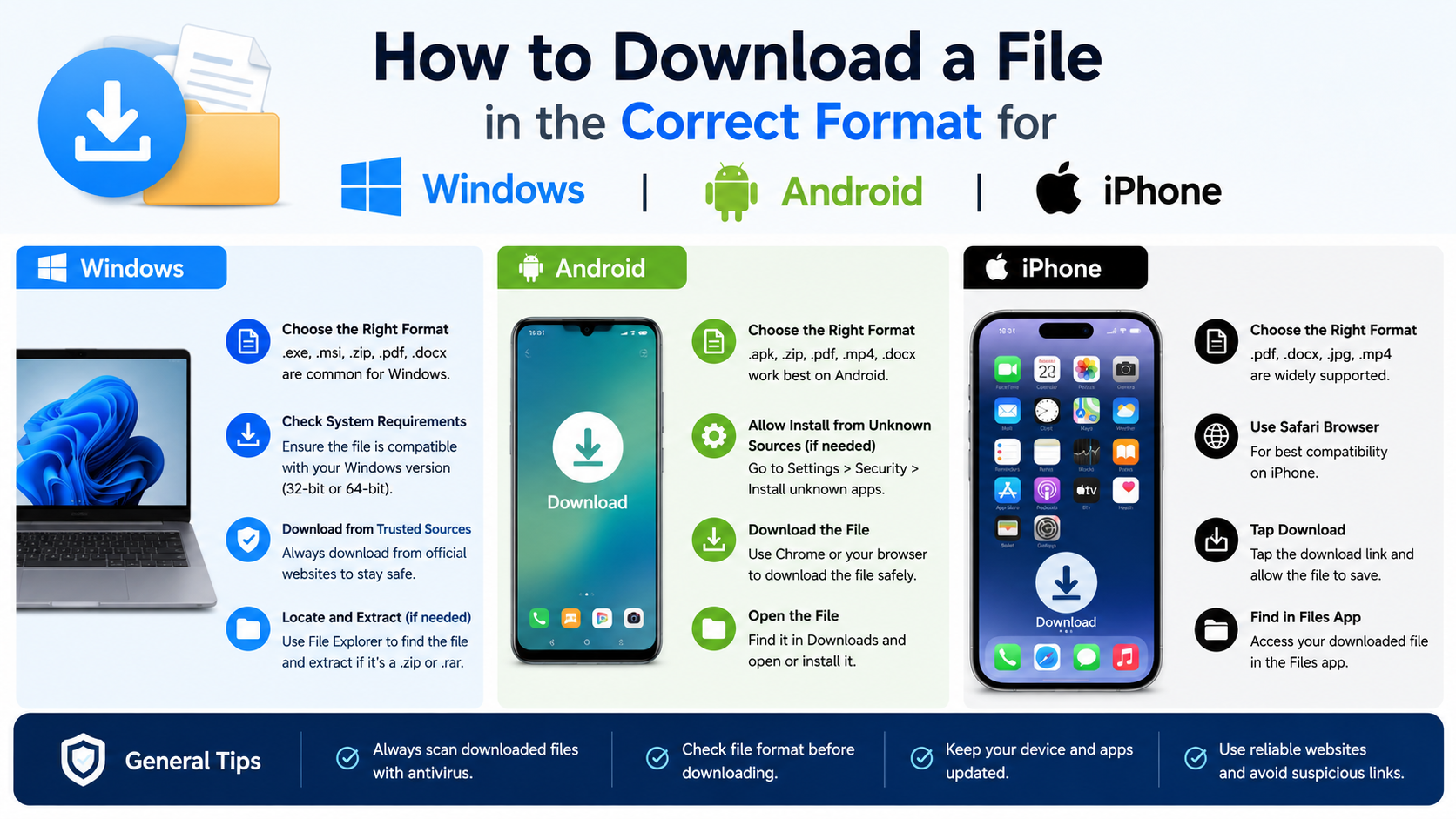
Yes. Android and iPhone browsers can download PDF or Word files. After downloading, open the file in a trusted document app, but complete and sign the final version carefully—preferably after printing it.
Is an online free will legally valid in India?
The online draft itself is not the finished will. It must be accurately completed and properly executed, including the testator’s signature or mark and attestation by the required witnesses.
Does a will have to be registered?
Registration is generally optional, but state procedures and individual circumstances differ. Ask the relevant Sub-Registrar or an advocate about the practical advantages and documents required.
Can I edit a downloaded template?
Yes, provided you understand every change. Delete instructional notes, remove unused alternatives and ensure that names, shares and property descriptions do not conflict.
Can one witness be a beneficiary?
Using a beneficiary as a witness can create avoidable legal and evidentiary issues. Choose two independent adults who do not receive gifts under the will whenever possible.
How often should I update my will?
Review it after marriage, divorce, birth or death in the family, a major property purchase, sale of investments, relocation or a significant change in your wishes. Execute a new will or properly prepared codicil rather than handwriting changes onto the old one.
Is a free template suitable for NRI property?
Usually not without review. Cross-border assets, local succession rules, tax matters and document-execution requirements can require coordinated advice in India and the other country.
Where should I keep the completed will?
Keep the signed original in secure, water-resistant storage and tell the executor how to access it. A scan can help with reference, but it normally does not replace the original for proving the will.